


Agentic AI design patterns are the architectural blueprints that describe artificial intelligence systems to plan, reason, act, and self-correct while completing complex tasks. Unlike traditional simple, and discrete AI systems that respond to a single prompt with a static answer, agentic blueprints allow AI designed to operate autonomously across multi-step workflows. These systems break down high-level goals into specific tasks, interact with external tools, evaluate their own outcomes, and adjust their behavior in real time based on feedback.
As organizations transition from basic chat-based assistants toward enterprise AI agents capable of managing end-to-end business processes, understanding these design patterns has become the foundation for building reliable, scalable, and trustworthy systems.
What Are Agentic AI Design Patterns?
Agentic AI design patterns are reusable architectural blueprints that define how AI agents reason, make decisions, and coordinate actions. These patterns transform large language models (LLMs) from passive responders into active, autonomous systems.
From Linear Prompts to Execution Cycles
Traditional AI interactions typically follow a simple, linear structure: Prompt → Response. This is often referred to as "Zero-shot" or "One-shot" prompting. While useful for simple queries, it lacks the depth required for complex enterprise work.
In contrast, agentic systems operate through a continuous execution cycle. This iterative approach allows enterprise systems to:
- Deconstruct Complexity: Break broad objectives into manageable sub-tasks.
- Gather Context: Pull information from APIs, databases, and diverse data sources.
- Self-Correct: Evaluate the accuracy of outputs and adjust behavior if results are incomplete or illogical.
- Adapt: Modify the "Plan" based on new "Observations" made during the "Action" phase.
For example, if an agent is tasked with "Resolving a customer shipping error," it doesn't just write a response. It checks the CRM for the order number, pings the logistics API for the tracking status, reasons that a delay occurred at a specific hub, and then drafts a resolution based on that real-world data.
Horizontal vs. Vertical Architectures
In the enterprise landscape, AI agents are generally categorized into two primary architectural approaches.
Horizontal AI Agent Architectures
Horizontal architectures focus on coordination between multiple AI agents acting as peers or specialized workers.
- Structure: Each agent specializes in a specific functional task (e.g., a "Search Agent," a "Coding Agent," or a "Summarization Agent"). They collaborate, often under the guidance of a "Manager Agent," to complete a workflow.
- Focus: General-purpose capabilities that can be applied across departments, such as collaborative research, content generation, or basic data analysis.
Vertical AI Agent Architectures
Vertical architectures focus on deep, domain-specific enterprise workflows.
- Structure: These systems are "tall" rather than "wide." They embed deep industry knowledge (e.g., healthcare regulations or financial GAAP standards), structured operational processes, and specialized data sources.
- Focus: High-value expertise within a specific business domain. A vertical agent for "Financial Compliance" isn't just a generic chatbot; it is hard-wired with the specific rules and document structures of the finance industry.
The 5 Core AI Agent Design Patterns
Most robust enterprise systems leverage a combination of these five core patterns to ensure reliability, transparency, and task completion.
1. Reflection Pattern
The Reflection pattern allows an agent to critique its own work. After generating an initial output, the agent "steps back" and evaluates it against a set of criteria. It looks for logical errors, missing information, or tone inconsistencies.
- Enterprise Value: Dramatically reduces "hallucinations" and ensures that the final output meets corporate quality standards before it ever reaches a human.
2. Tool Use Pattern
The Tool Use pattern (often called "Function Calling") enables agents to interact with the digital world. Instead of just "knowing" things from their training data, they can do things via:
- APIs: To check stock prices or weather.
- Databases: To query customer records.
- Code Interpreters: To perform complex mathematical calculations that LLMs typically struggle with.
3. Planning Pattern
The Planning pattern empowers agents to decompose a high-level goal into a sequence of executable steps. Before taking any action, the agent creates a "roadmap."
- Example: For a goal like "Perform a market analysis," the planning agent identifies that it must: 1) Identify top 5 competitors, 2) Search for their latest annual reports, 3) Compare pricing models, and 4) Synthesize a SWOT analysis.
4. Multi-Agent Collaboration Pattern
This pattern divides responsibilities among specialized agents—mimicking a human department.
- Roles: You might have a Researcher (finds data), a Writer (drafts text), and a Reviewer (checks for compliance).
- Coordination: A "Manager" or "Orchestrator" agent ensures the handoffs between these specialists are seamless.
5. ReAct Pattern (Reason + Act)
The ReAct pattern combines reasoning and action in a continuous loop: Thought → Action → Observation → Next Thought.
- Mechanism: The agent documents its internal "thought" process, performs an "action" (like a web search), observes the result, and then updates its "thought" process based on what it found. This makes the AI's reasoning transparent and traceable.
Real-World Enterprise AI Agents (14 Examples)
The true power of enterprise AI agents is seen when these patterns are combined to solve specific operational friction points.
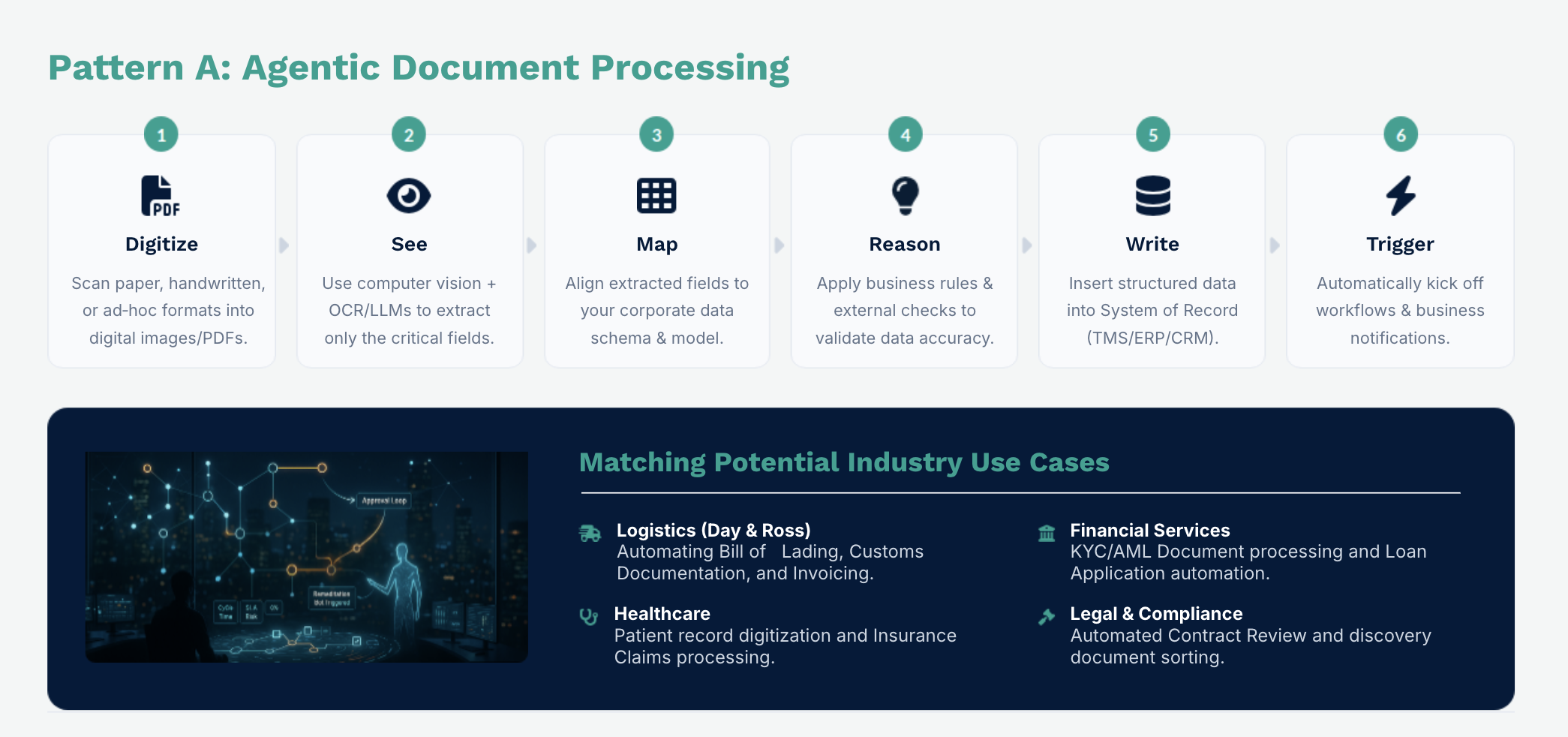
Pattern A: Agentic Document Processing
Moves from simple OCR to autonomous understanding of unstructured physical data.
- Workflow: Digitize → See → Map → Reason → Write → Trigger.
- Industry Use Cases: * Logistics: Automating Bill of Lading and Customs Documentation.
- Financial Services: KYC/AML processing and Loan Applications.
- Healthcare: Patient record digitization.
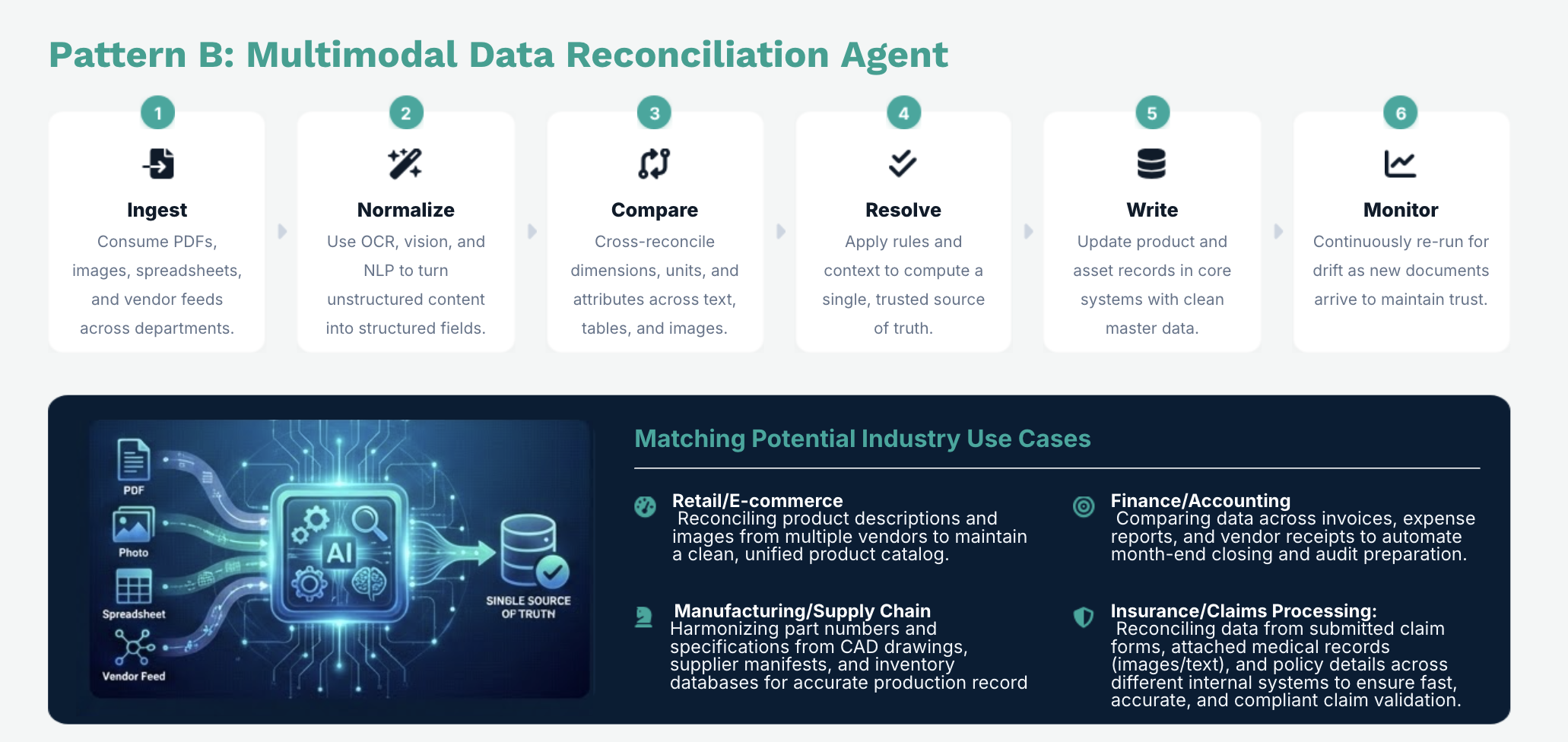
Pattern B: Multimodal Data Reconciliation
Reconciles data across disparate formats (PDFs, SQL, CSVs, Images).
- Workflow: Ingesting bank statements and internal ledgers to resolve mismatches.
- Industry Use Cases:
- Finance: Month-end closing and vendor record consolidation.
- Insurance: Reconciling premium payments against policy ledgers.
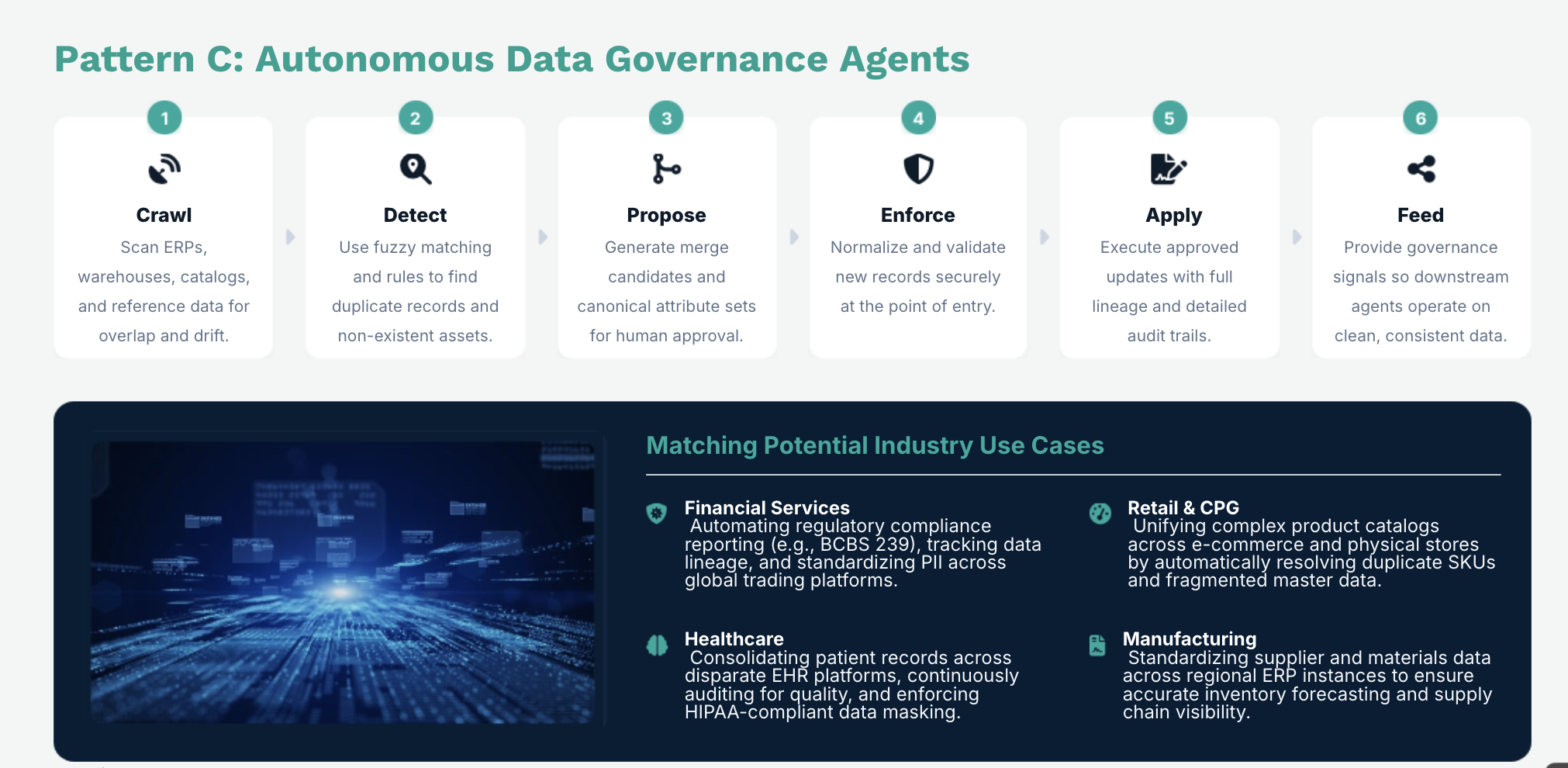
Pattern C: Autonomous Data Governance
Maintains "Golden Records" and data integrity without manual intervention.
- Workflow: Identifying duplicates, proposing merges, and maintaining audit trails.
- Industry Use Cases:
- Healthcare: Master Patient Index (MPI) cleanup.
- Retail: Consolidating customer data across loyalty and POS systems.
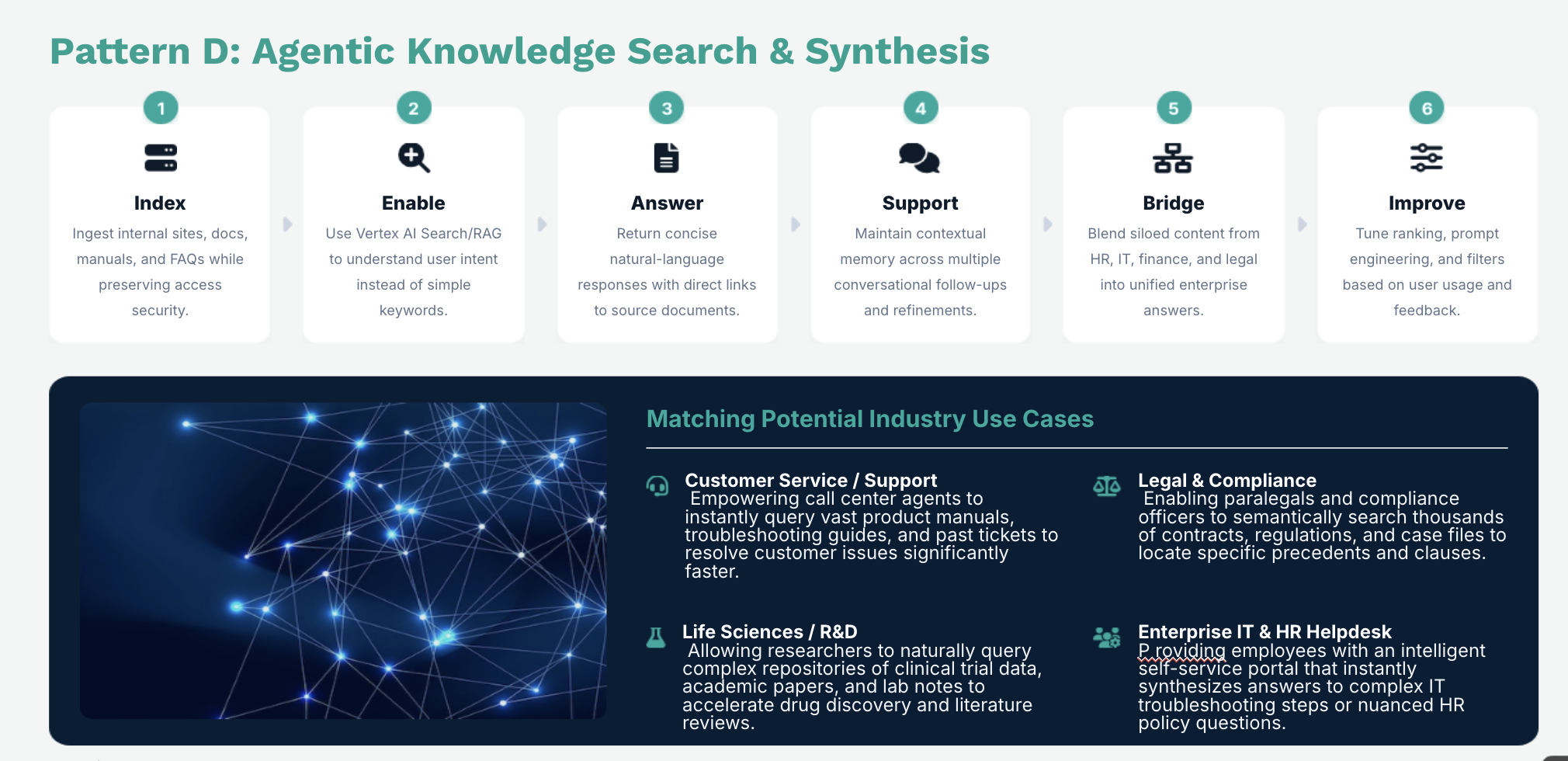
Pattern D: Knowledge Search & Synthesis
Goes beyond keyword search to semantic interpretation and summarized answers.
- Workflow: Semantic Search → Filter → Reason → Cite → Answer.
- Industry Use Cases:
- Legal: Regulatory research and discovery document sorting.
- HR: Internal policy assistants and benefit inquiry automation.
Pattern E: Agentic Product Catalog Management
Automates the lifecycle of digital products and inventory listings.
- Workflow: Extracting product attributes from images/descriptions and mapping to taxonomies.
- Industry Use Cases:
- E-commerce: Automating marketplace listings.
- Manufacturing: Managing complex SKU hierarchies and parts catalogs.
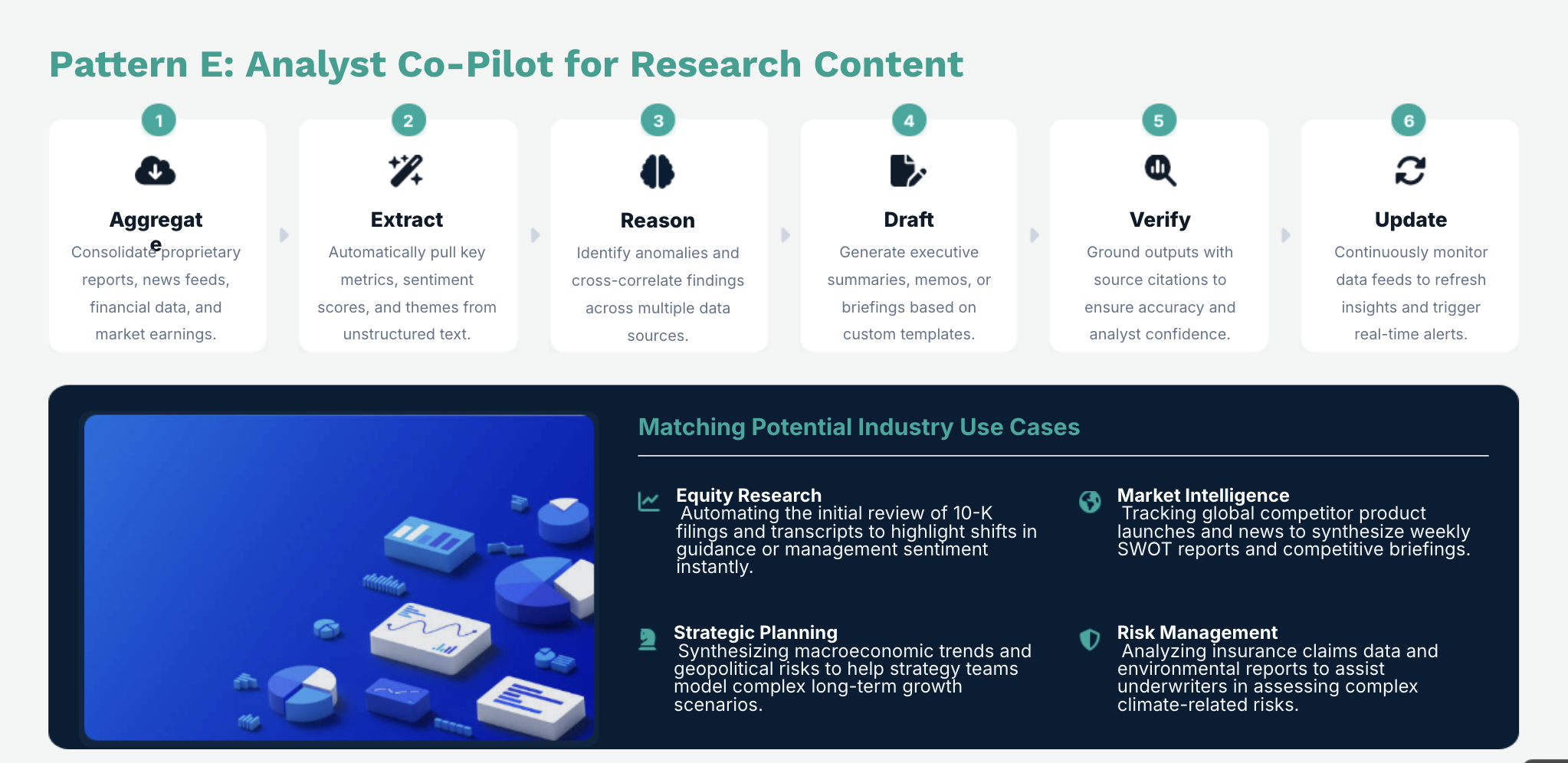
Pattern F: Inventory & Resource Optimization
Predicts demand and autonomously balances physical or digital resources.
- Workflow: Monitoring supply signals to trigger rebalancing or reordering.
- Industry Use Cases:
- Retail: Inventory transfers between store locations.
- Logistics: Optimizing empty container repositioning.
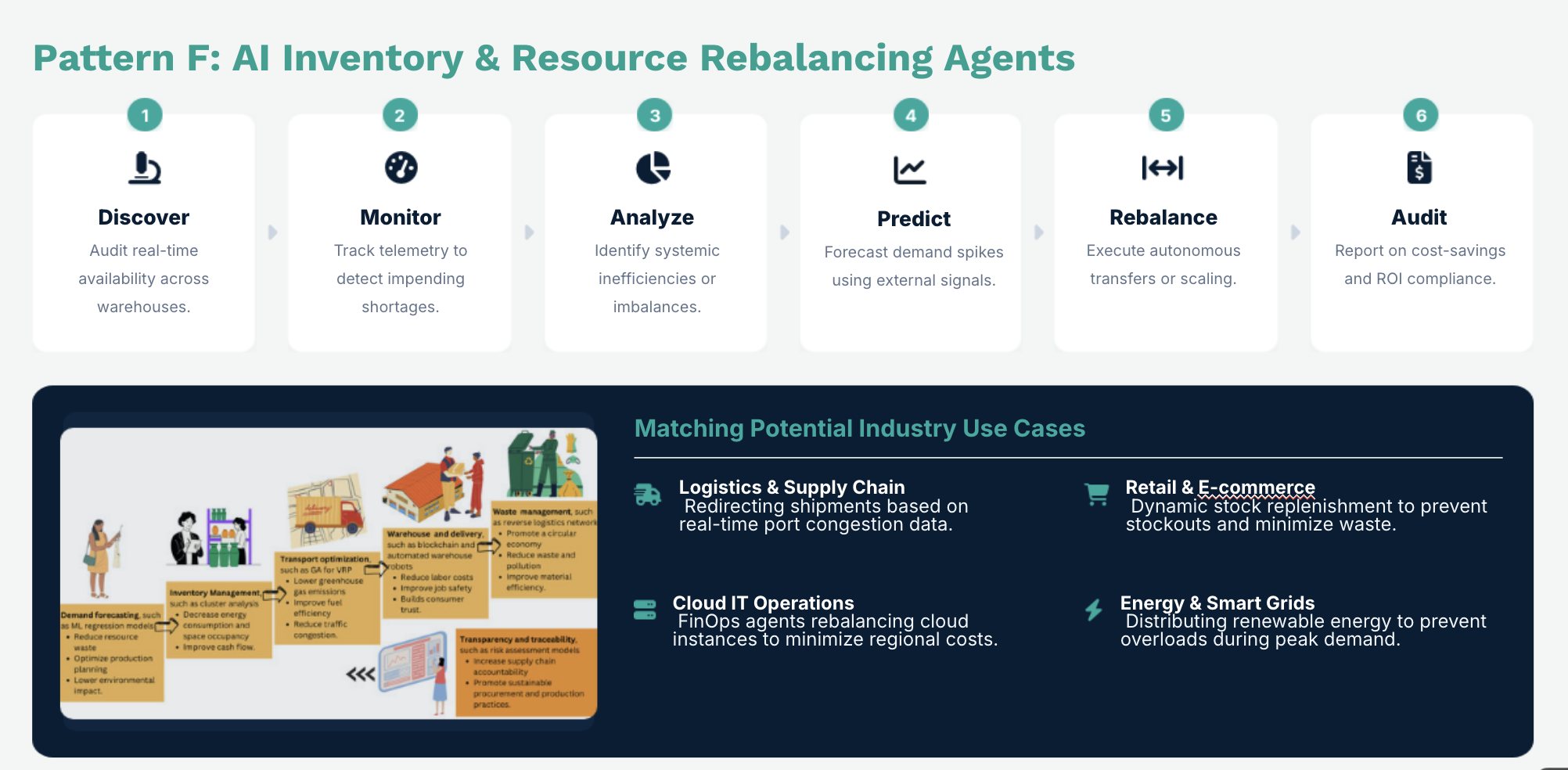
Pattern G: Dynamic Pricing & Revenue Optimization
Responds to market elasticity and competitor shifts in real-time.
- Workflow: Competitor Scraping → Margin Analysis → Price Adjustment → Feedback Loop.
- Industry Use Cases:
- Travel/Hospitality: Adjusting room rates based on local event demand.
- Retail: Dynamic discounting for perishable goods.
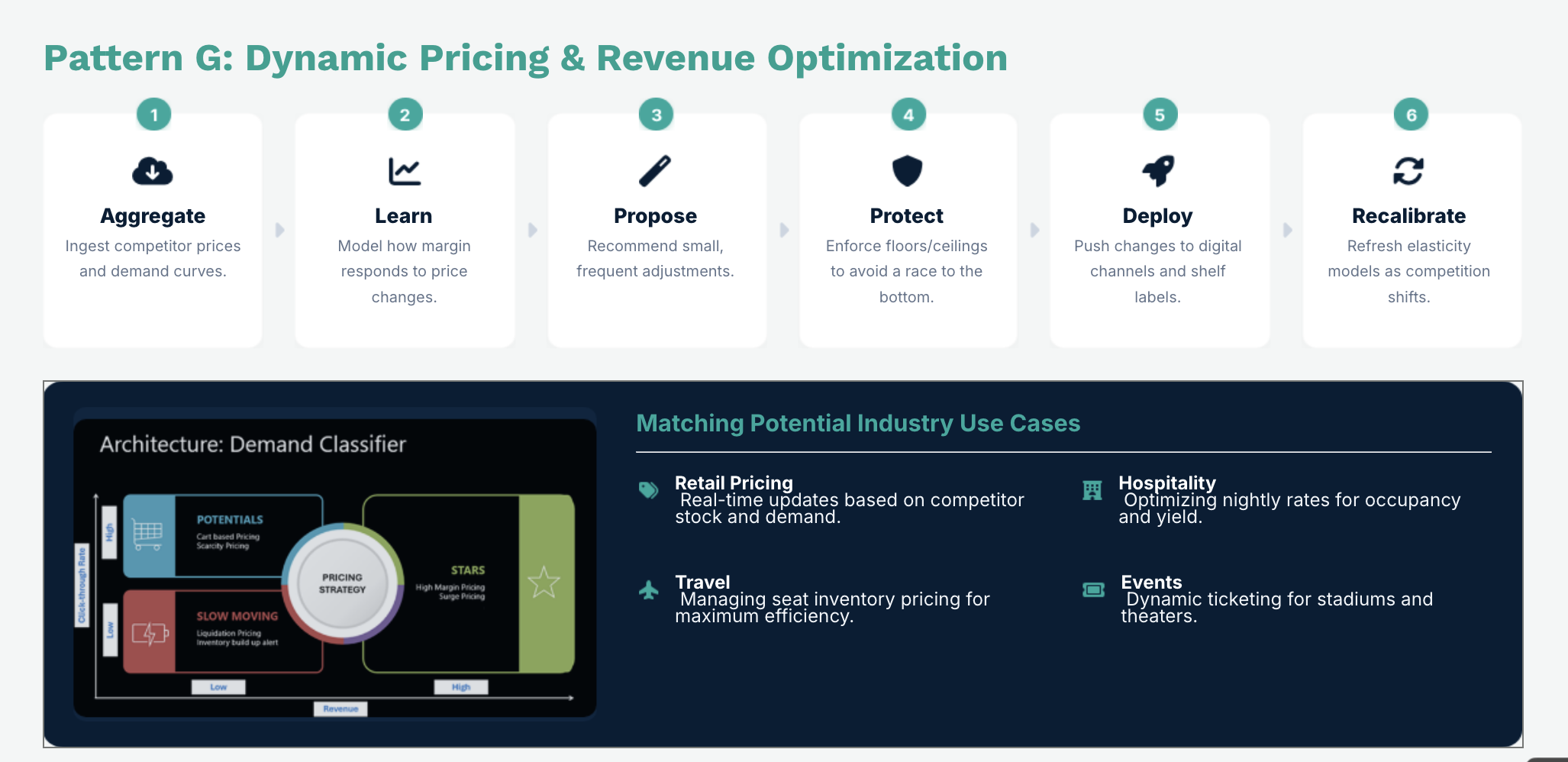
Pattern H: Personalized Customer Engagement
Moves from generic "segments" to individual 1:1 agentic interactions.
- Workflow: Analyzing purchase history and sentiment to trigger custom offers.
- Industry Use Cases:
- Marketing: Hyper-personalized email and SMS campaigns.
- Gaming: Dynamic in-app offers based on player behavior.
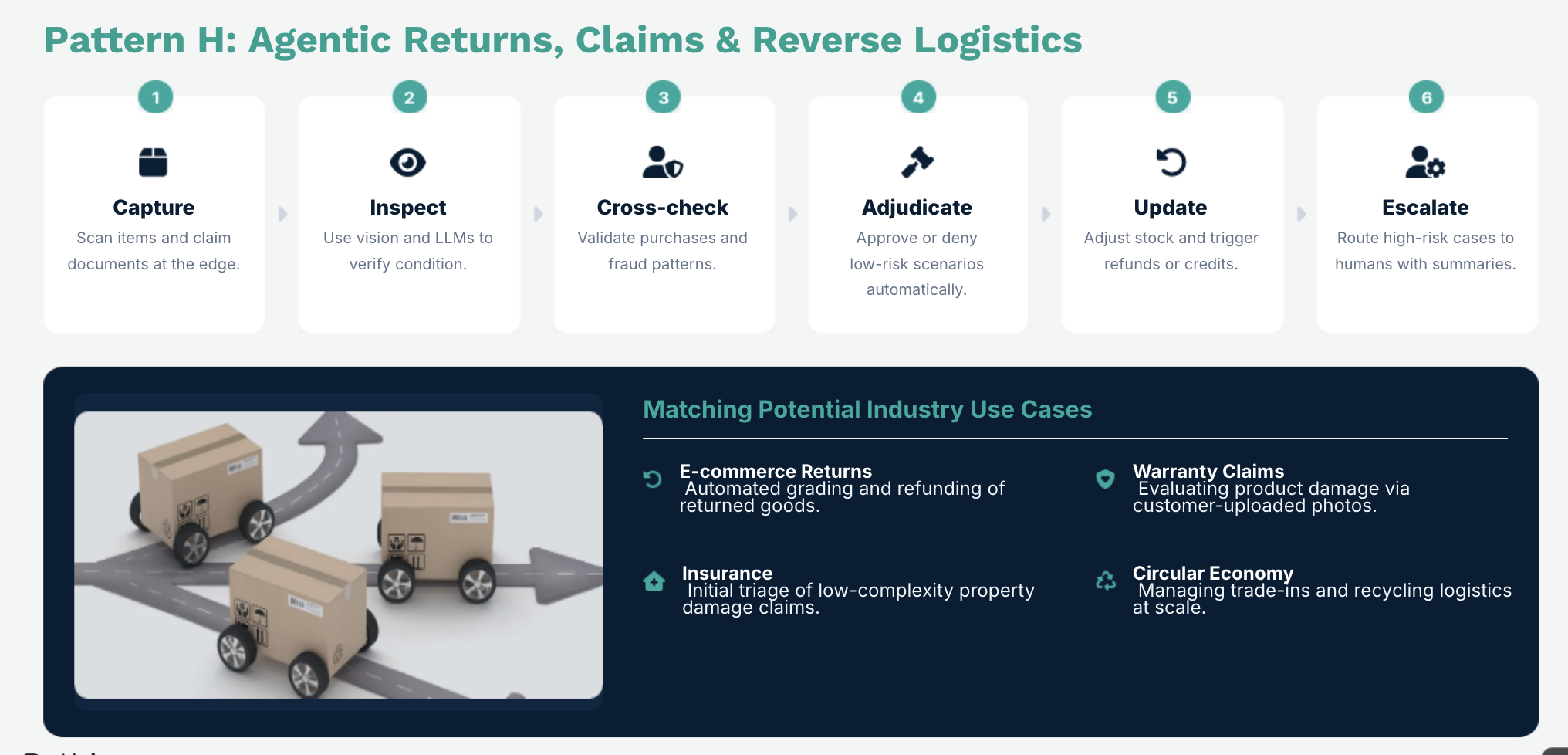
Pattern I: Agentic Customer Support & Success
Solves problems autonomously rather than just providing "help articles."
- Workflow: Intent Detection → Tool Use (Check Order Status) → Resolution → Survey.
- Industry Use Cases:
- SaaS: Automating technical troubleshooting and account setup.
- Telecom: Managing service appointments and billing disputes.
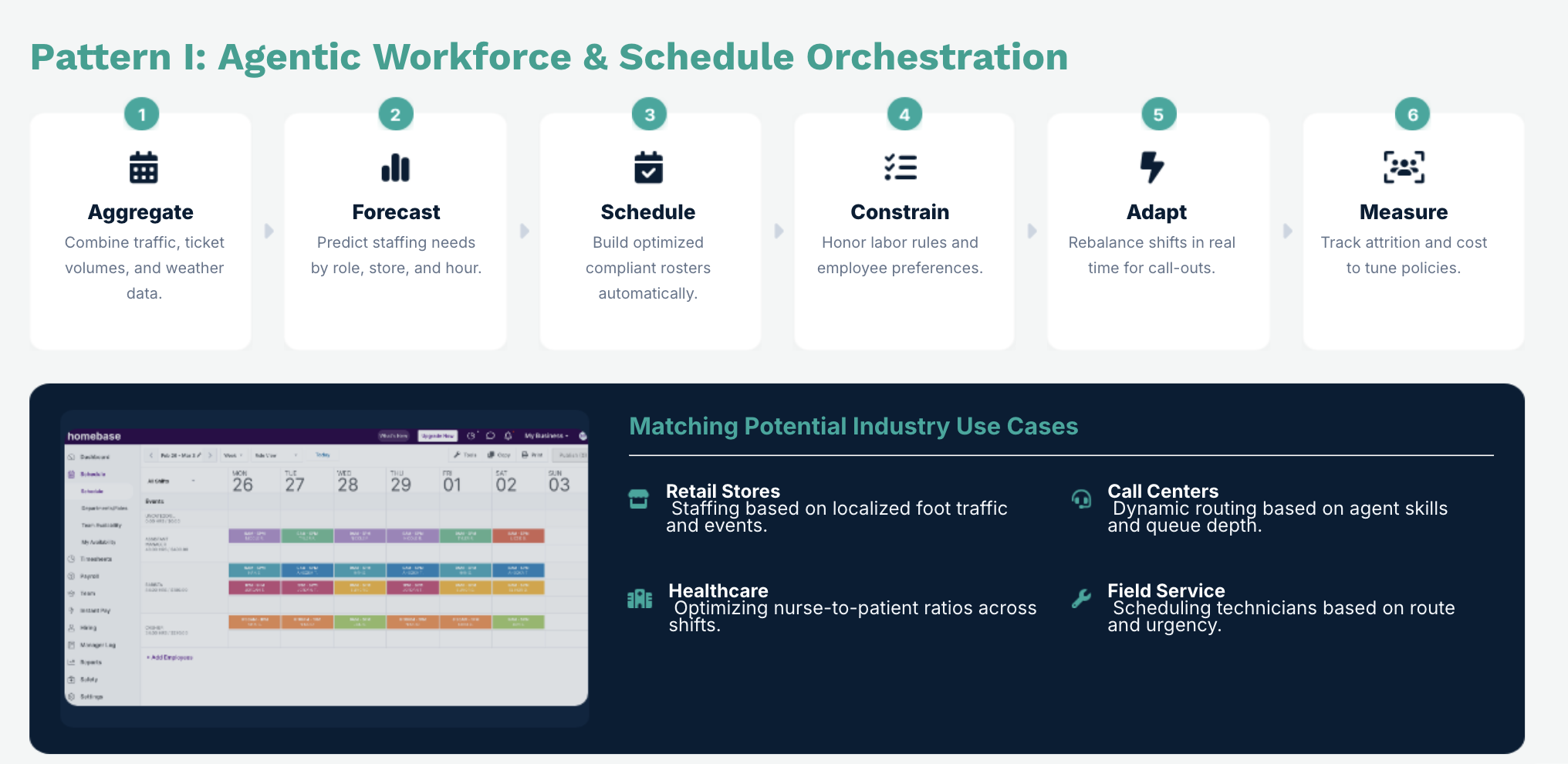
Pattern J: AI-Assisted Code Modernization
Accelerates the migration of legacy technical debt.
- Workflow: Inventory → Refactor → Test Generation → Validation.
- Industry Use Cases:
- Banking: Migrating COBOL mainframes to cloud-native Java.
- Tech: Converting legacy Python 2.x codebases to modern standards.
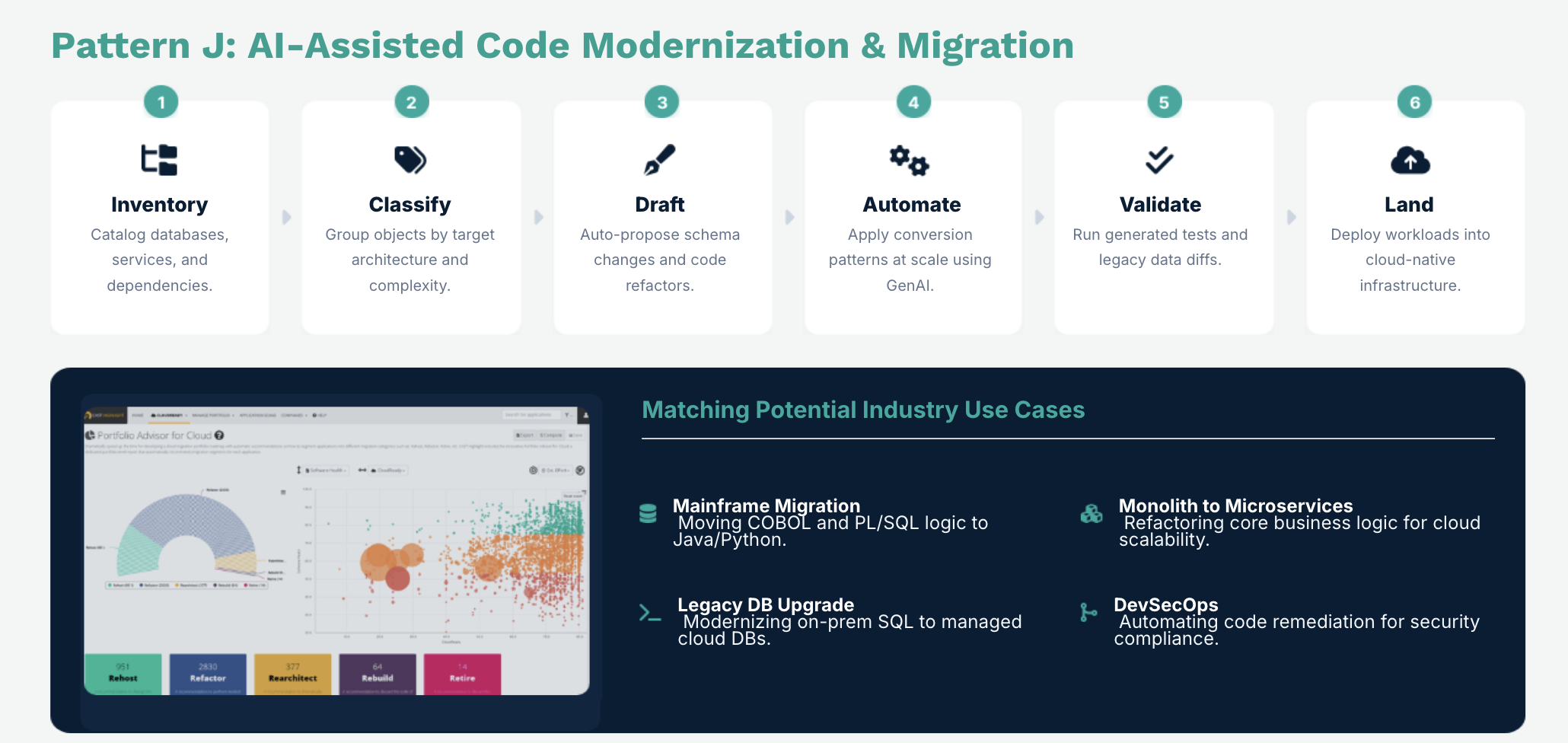
Pattern K: Agentic IT Operations (AIOps)
Predicts and remediates infrastructure issues before they cause downtime.
- Workflow: Log Monitoring → Root Cause Analysis → Patch/Reboot → Report.
- Industry Use Cases:
- Cloud Providers: Automated resource scaling and failover.
- Cybersecurity: Real-time threat hunting and log correlation.
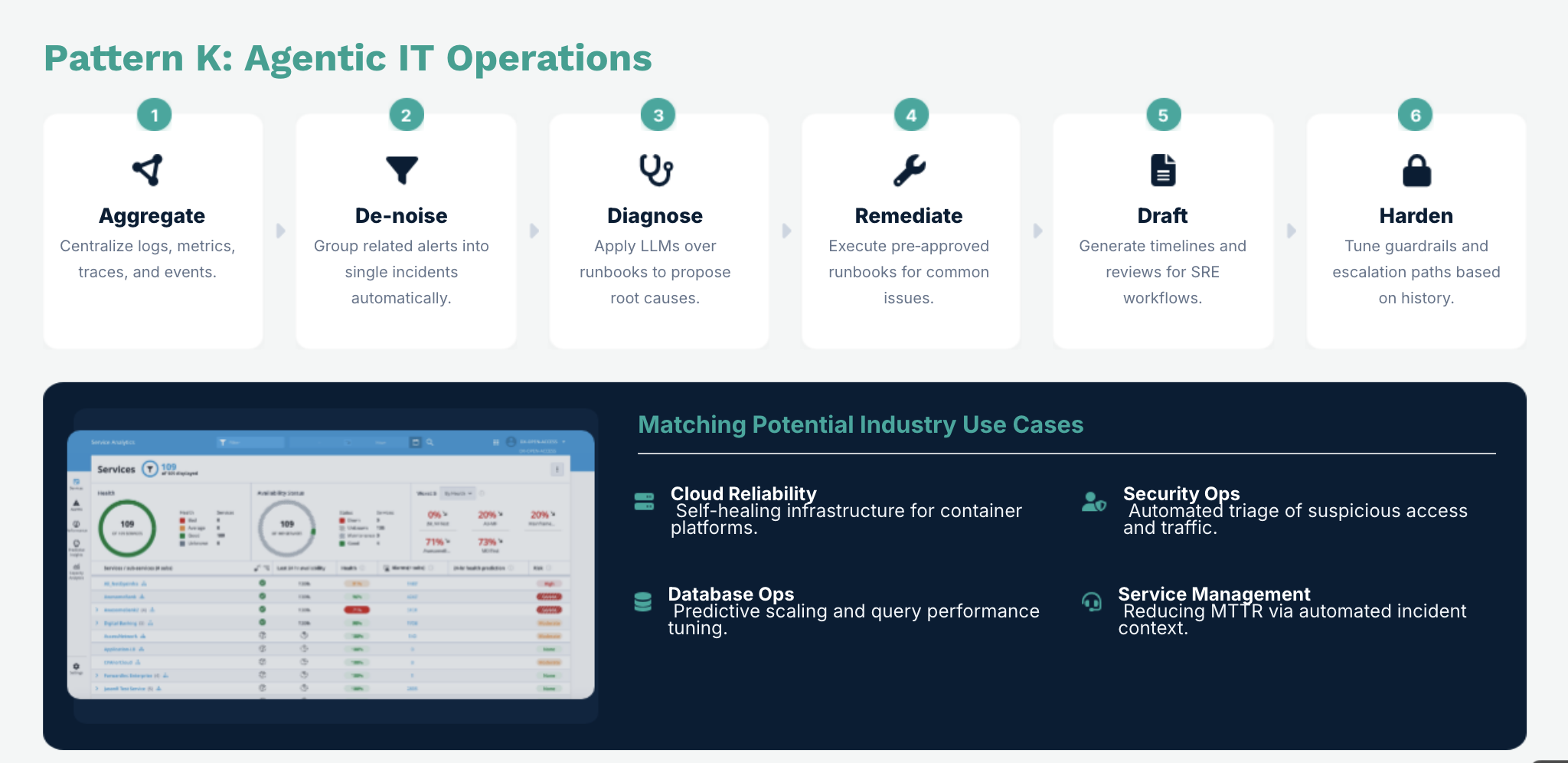
Pattern L: Analyst Co-Pilot
Synthesis of massive unstructured market data into actionable intelligence.
- Workflow: Document Ingestion → Trend Identification → Executive Summary.
- Industry Use Cases:
- Investment Banking: Earnings call analysis and sentiment tracking.
- Pharma: Monitoring clinical trial results and patent filings.
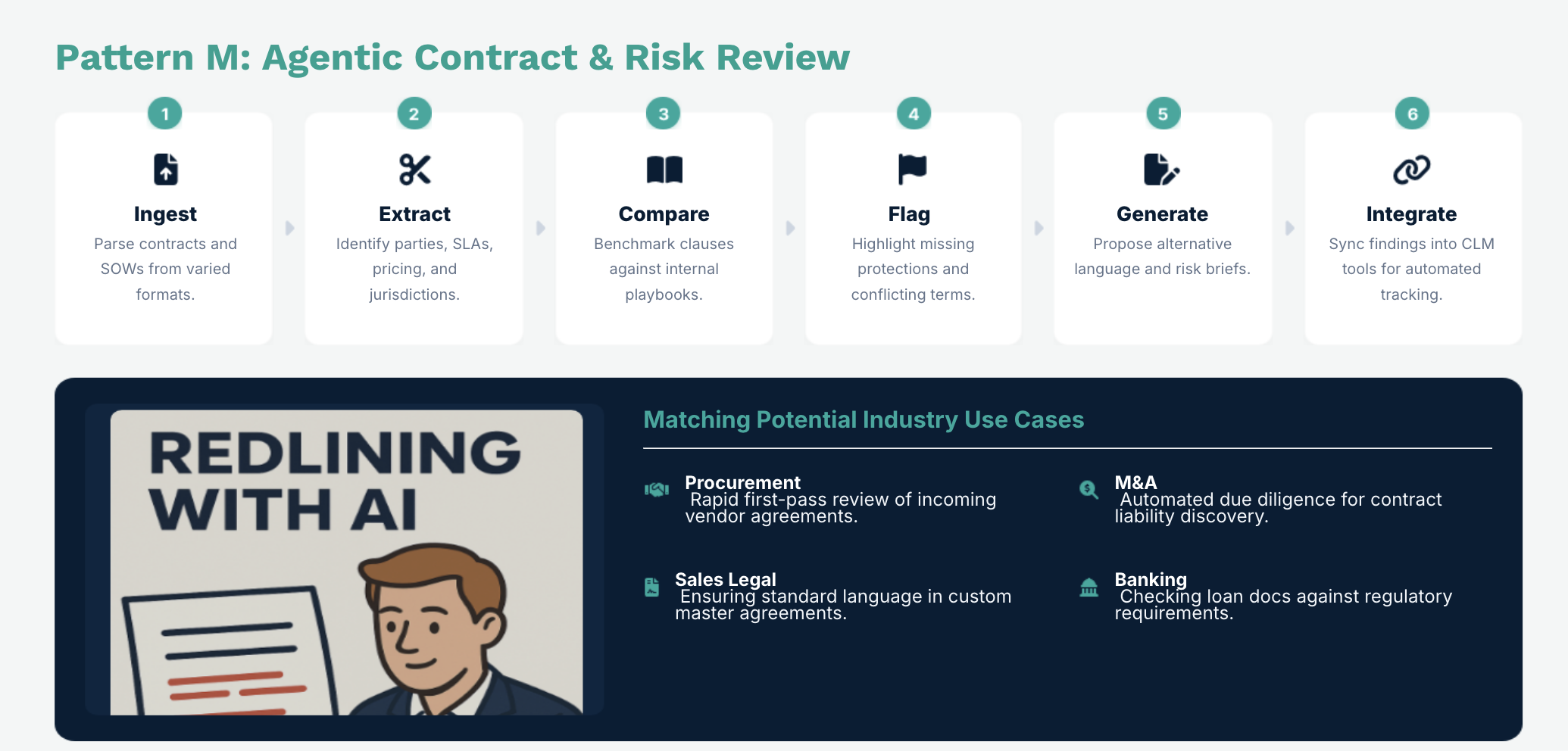
Pattern M: Agentic Returns & Claims Adjudication
Automates the approval or denial of claims based on visual and textual evidence.
- Workflow: Evidence Ingest → Damage Assessment → Policy Check → Payout.
- Industry Use Cases:
- Insurance: Auto accident and property damage claims.
- Retail: Automating "keep it" vs "return it" decisions for online orders.
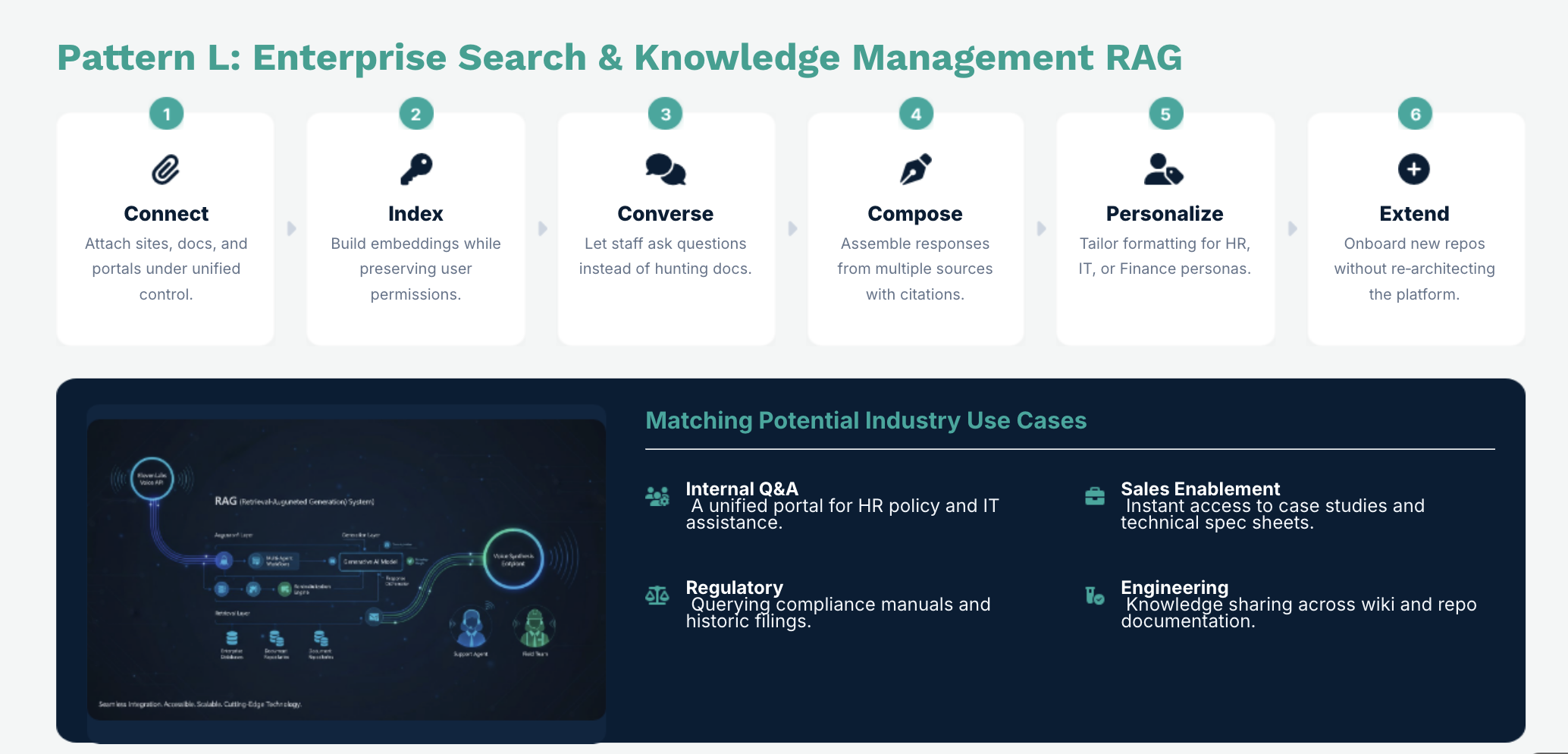
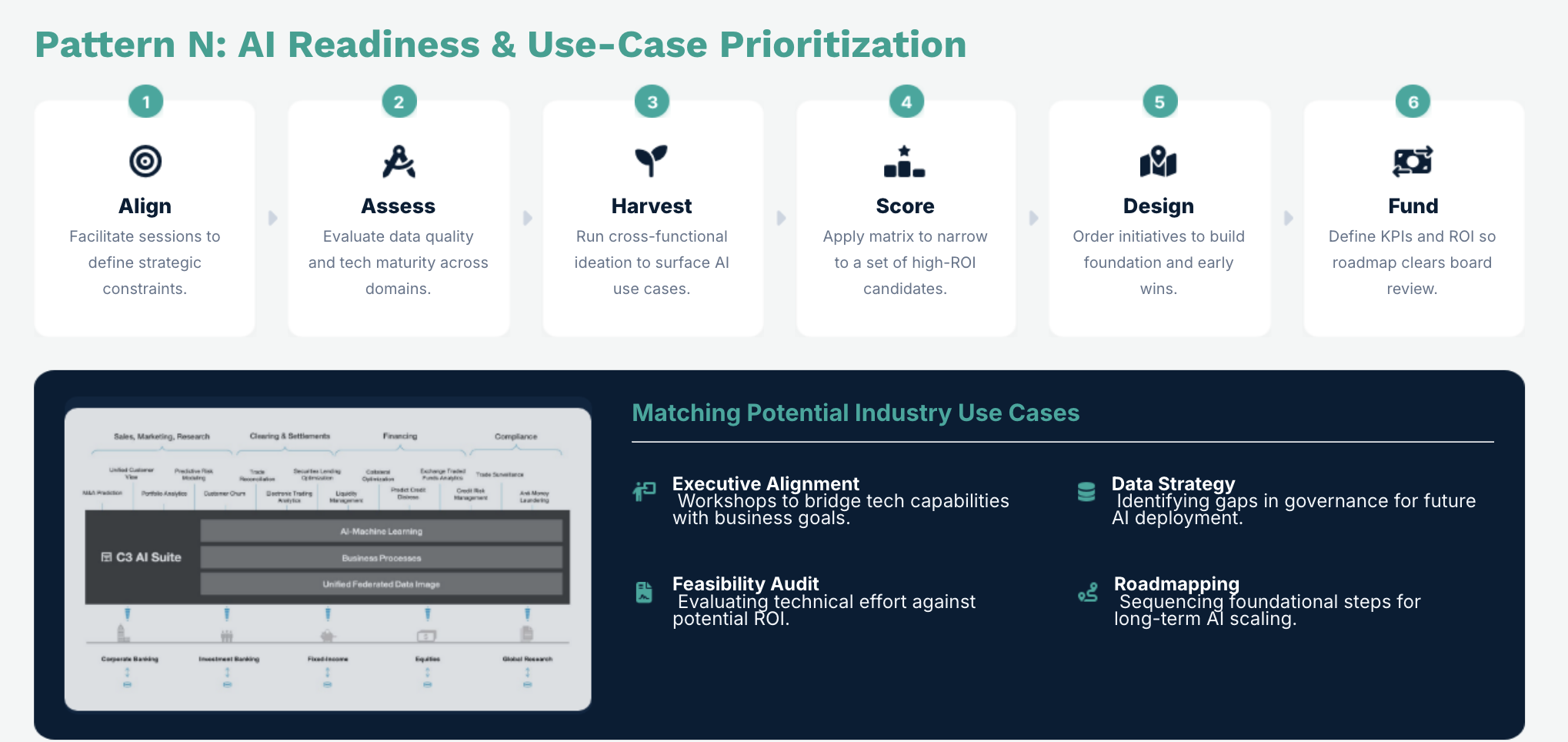
Pattern N: Agentic Workforce & Schedule Orchestration
Optimizes human capital by reacting to real-time environmental signals.
- Workflow: Signal Detection (Weather/Traffic) → Forecast → Schedule Rebalance.
- Industry Use Cases:
- Healthcare: Nurse and physician shift optimization.
- Field Services: Dispatching technicians based on traffic and parts availability.
Implementation: Choosing the Right Design Pattern
Selecting the appropriate AI agent design pattern depends on the specific nature of the problem you are solving.
|
If your primary challenge is... |
Recommended Pattern |
|
High stakes/Zero-error tolerance |
Reflection: Always have the agent double-check its work. |
|
Connecting to legacy software/APIs |
Tool Use: Enable the agent to "act" in the real world. |
|
Complex, multi-day projects |
Planning: Break the project into smaller, verifiable chunks. |
|
Interdisciplinary knowledge needs |
Multi-Agent: Assign specialists to different parts of the problem. |
|
Highly dynamic/Unpredictable data |
ReAct: Allow the agent to "think" out loud and adjust to observations. |
The "Human-in-the-Loop" Necessity
While we call these agents "autonomous," the enterprise context requires a Human-in-the-Loop (HITL) framework. Agentic patterns are designed to handle the "drudge work," but humans remain the ultimate decision-makers.
Key HITL touchpoints include:
- Approval Gates: The agent can draft a $50,000 purchase order, but a human must click "send."
- Feedback Loops: If a human corrects an agent’s output, that correction is used as "few-shot" training for the agent to improve its next cycle.
- Policy Definition: Humans set the "Guardrails"—the ethical, legal, and financial boundaries within which the agent is allowed to operate.
The Future of Enterprise AI Agents
The shift toward agentic AI patterns represents a fundamental transition in corporate computing: the move from "Software as a Tool" to "AI as a Teammate."
From Single Agents to Agentic Ecosystems
We are moving away from the idea of a single "Master AI." Instead, the future enterprise will consist of an ecosystem of specialized agents—a "Digital Workforce." In this future:
- An Agentic Document Processor in the warehouse will hand data off to a Reconciliation Agent in the finance office.
- The finance agent will then inform the Revenue Optimization Agent in the sales department.
- These agents will communicate via standard APIs, creating a seamless, autonomous flow of information and action.
Autonomous Governance and Auditability
As AI agent design patterns mature, so will the requirements for transparency. Future agentic systems will include built-in "Self-Auditing" patterns. Every decision made by an agent will be accompanied by a logical trace:
- Which data was used? (Source citations)
- What was the reasoning? (Thought trace)
- Which business rule was applied? (Logic verification)
This level of auditability is what will allow highly regulated industries—like Banking and Healthcare—to fully embrace the power of autonomous AI.
Conclusion: Building the Foundation
Understanding and implementing agentic AI patterns is no longer a luxury for innovation labs; it is a necessity for any enterprise looking to stay competitive in the age of AI. By moving beyond simple chatbots and building systems that can plan, act, and reflect, organizations can unlock levels of efficiency and accuracy that were previously impossible.
Are you ready to map your first agentic workflow? Start by identifying a high-volume, logic-heavy process in your department and asking: "If an AI could reason through this, what tools would it need to succeed?"
Agentic AI Services
Ready to start your AI journey?
Share this
Share this

HR Heroes: Simplifying People Management with Gemini
The Executive’s AI Assistant: Gemini for Strategic Planning and Growth


.svg)
.svg)