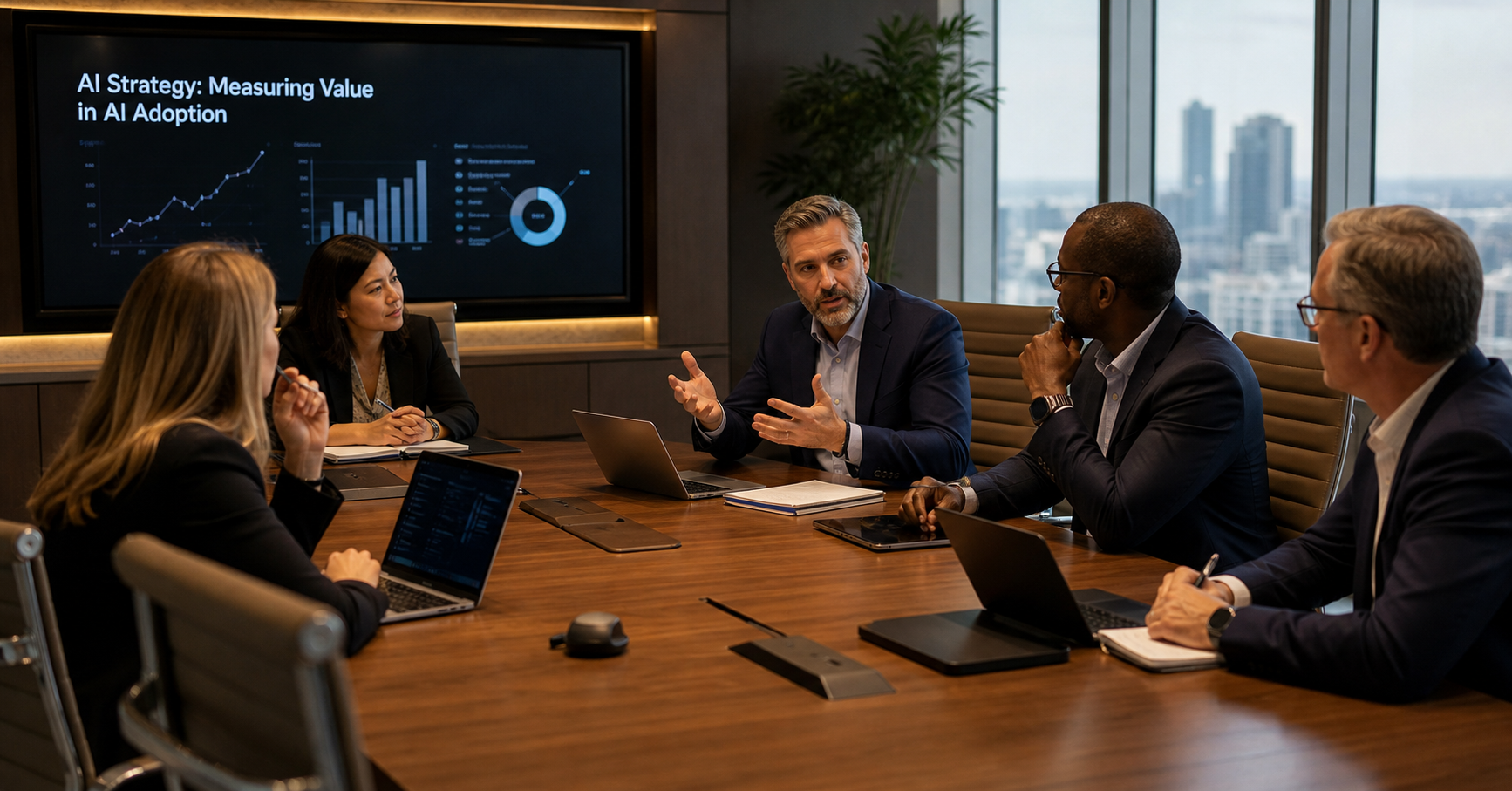
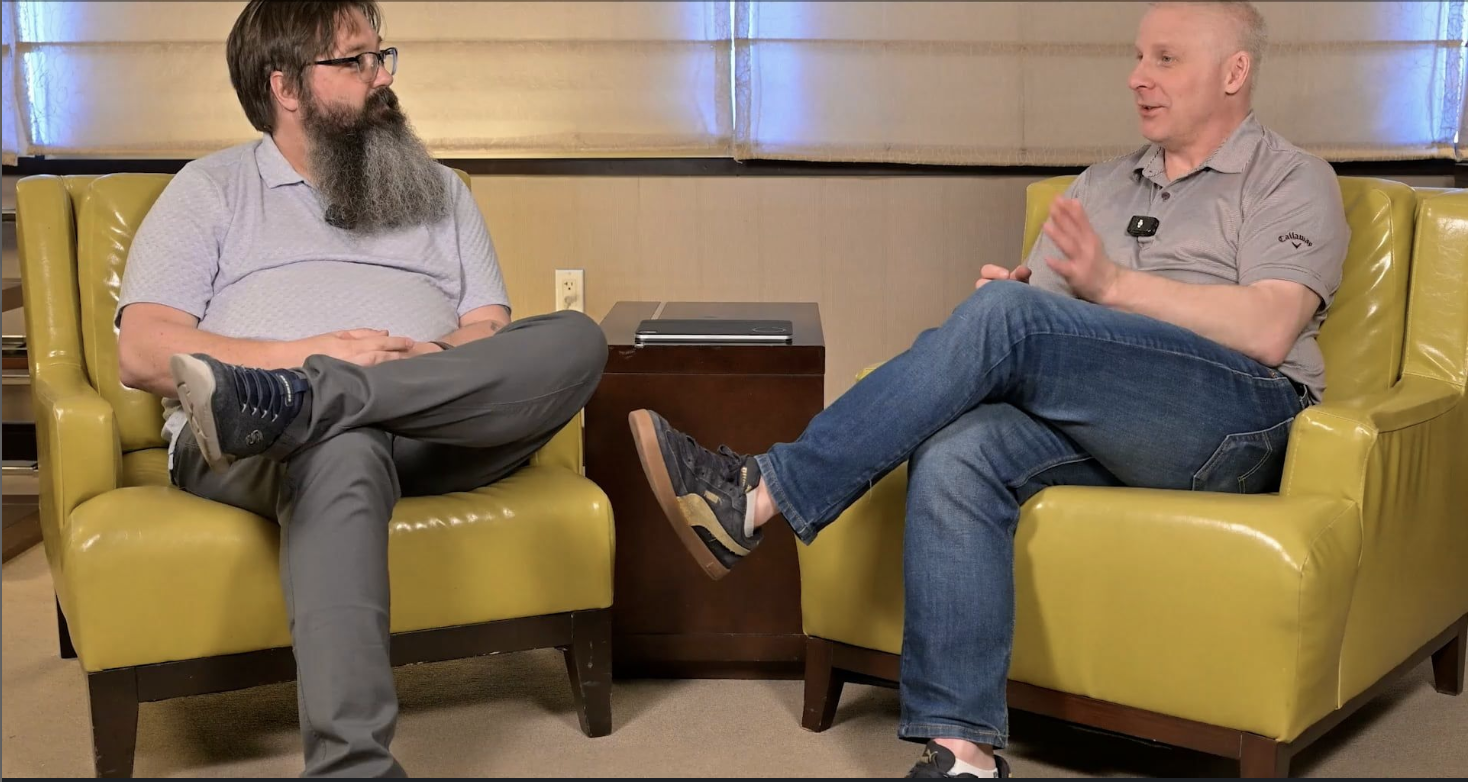
The dust has finally settled on Google Cloud Next 26, and if there is one definitive takeaway, it is this: The era of AI experimentation is over.
Having attended this conference four times now, I’ve watched Google Cloud evolve from its early days of Google Workspace to today’s automated, agentic world. This year marked a fundamental shift: The conversation moved from building agents to operationalizing AI automation at scale.
That shift brings the importance of AI automation consulting into focus—not as another experiment, but as the work of connecting AI to real business processes and making it reliable in production.
Businesses now need to make AI automation work in production environments
After being mesmerized by impressive demos, organizations are now facing the harsh reality of making these tools work within a professional enterprise environment. The current goal is not simply to deploy more agents. It’s to connect useful AI capabilities to the processes, data, and systems where they can make a measurable difference.
Experimenting with AI and playing with pilots is over; the era of the AI operating model has arrived.
The majority of AI projects and pilots stalled last year
Last year, the goal was simply to see what was possible. Companies rushed to build prototypes without a clearly defined set of measurable outcomes. The sobering reality is that the vast majority of those pilots never reached production.
Why do AI projects fail to reach production?
There are two main reasons why AI projects fail to reach the finish line:
- Wrong use case selection: Organizations choose tasks with too little business impact, or projects so complex that the required data and system connections are not in place.
- Lack of operational knowledge: Teams treat AI like a static piece of software. In production, models and agents are ever-evolving. They need ongoing maintenance, monitoring, updates, and clear ownership to remain useful.
A successful demo is a technical milestone. It is not an operating model. AI in production has to fit the way the business works, use appropriate data, connect to the systems where work happens, and be evaluated against outcomes that matter.
Operationalize AI: Deploy high-impact solutions into production with precision
As a C-suite executive, your focus is likely shifting from the novelty of AI to its bottom-line impact. The question is no longer only “What can we build?” It is “Which business process should change, how will the solution fit into our environment, and how will we know it is working?”
That is where companies specializing in AI automation consulting can help connect strategy to execution: identifying high-value use cases, preparing the underlying data, building and integrating AI solutions, and managing them once they are in production.
This work is broader than selecting a model. It includes the data foundation, workflow design, system integration, governance, and operational practices needed to make AI useful over time.
Ground your AI strategy in quantifiable business impact
Quantifying AI value remains a leadership challenge. Organizations can get caught calculating small time savings across thousands of employees, even when those gains are hard to see in business results.
I advocate for a shift toward high-impact velocity.
Consider the difference between saving five minutes for a thousand people and saving one key individual two weeks of labor every quarter. The latter can represent a structural change to a business process.
When we compress a fortnight of manual analysis into a few hours, we aren't just saving time; we are creating a marketable result and a competitive lead-time advantage.
For example, take this case with our customer Day & Ross. Pythian developed an AI solution for the logistics leader that automated bills of lading processing, achieving 10x faster speed, 99% data accuracy, and a capacity of 120 documents per minute. These results are specific to its logistics workflow, but show how process-level measurement makes AI’s impact tangible.
When you focus on transforming entire workflows rather than chasing isolated minutes, you shift the conversation from simple time-savings to true business transformation.
And for C-suite leaders evaluating enterprise AI automation services, this is where technical deployment becomes operational leverage. Meaningful impact ultimately centers on four quantifiable pillars:
- Reduced operating costs: Automating labor-intensive, repetitive tasks and eliminating downstream manual rework.
- Headcount-decoupled scalability: Expanding transaction and process throughput without forcing linear staffing growth.
- Accelerated process velocity: Removing organizational friction and latency across cross-functional enterprise workflows.
- Error elimination & quality: Replacing inconsistent manual data handling with deterministic verification and governed execution.
For leaders who need to align on business priorities and technical hurdles, an AI workshop can help fast-track those conversations and shape a roadmap.
Build on a reliable data foundation with ongoing governance
You cannot build an agentic enterprise on a broken data foundation. Yet, the traditional solution—massive, multi-year data migrations—is often the death knell for AI momentum.
If your data is siloed in legacy platforms or disparate clouds, the gravity of that data will stall your AI initiatives before they ever launch.
Overcoming data gravity requires structured validation before writing a line of model code. A comprehensive data readiness assessment evaluates your underlying security, schema hygiene, and pipeline latency to ensure autonomous agents receive accurate context.
From there, dedicated AI tool integration connects these reasoning engines directly into your core enterprise systems—unifying ERPs, CRMs, and proprietary databases without forcing high-risk, multi-year data migrations.
That leads to a practical architectural question: "How can agents work with data across cloud environments without duplicating everything in a central store?"
Google’s cross-cloud lakehouse is one approach. Rather than moving every byte of data into a single repository, you can now perform natural language querying and ground your AI agents across federated data estates, including AWS and Azure.
This AI-native approach allows you to leave data where it resides while maintaining a unified semantic layer, resulting in a drastic reduction in the data tax typically associated with large-scale AI.
Design AI architecture for replaceability and change
Perhaps the most critical insight for 2026 is the rejection of permanence. In a landscape where model capabilities and costs shift monthly, an all-in bet on a specific technology is a strategic risk.
My primary non-functional requirement for any AI project is replaceability. If your team builds a custom, tightly coupled solution today, you are likely creating the technical debt of tomorrow.
To stay agile, you must take into account:
- Models: Ensure your ecosystem is built for interoperability, allowing you to optimize performance by leveraging the best-in-class strengths of various models across the AI landscape.
- Infrastructure: Prioritize containerized, cloud-native environments that support workload portability.
- Logic: Use agentic frameworks that decouple business logic from the underlying LLM.
The goal is not to change technology for its own sake. It's to preserve the ability to adapt without rebuilding the business process every time the AI landscape moves. In the agentic era, your competitive advantage isn't the specific AI you use today—it’s the agility of your architecture to adopt the superior AI of tomorrow.
Making production AI easier: Google’s strategy
Google Cloud has evolved from providing a collection of tools to providing a comprehensive AI operating system. To bridge the gap between build and operate, Google has introduced an operational infrastructure designed for orchestration:
- AI Catalogs for enterprise-wide organization.
- Agent Repositories for robust version control.
- Marketplaces for both internal and external agents.
Watch the Google Cloud Next 2026 Opening Keynote.
Manage and govern AI after launch
The winners of 2026 will not be the companies with the most pilots; they will be the ones that master AIOps—the ability to manage, govern, and scale agents in ways that actually move the needle on revenue.
Deploying autonomous agents is only step one; enterprise initiatives succeed or fail on maintaining their operational integrity. Through dedicated AI Managed Services (AIOps), Pythian provides ongoing governance to prevent model drift, monitor non-deterministic outputs, enforce security protocols, and actively optimize compute and token consumption.
Scale your enterprise with AI automation consulting
Explore Pythian’s AI Automation Consulting services to see how strategy, data, integration, deployment, and ongoing management can help move enterprise AI from experimentation into production.